Drovqelianix
Luma Session
Luma Session
Couldn't load pickup availability
1. Problem Statement
After learning the first HTML tags and CSS rules, many learners wonder how to make a page feel more complete. A heading, paragraph, image, and button may work separately, but the full layout can still feel scattered. Spacing may look uneven, colors may feel random, and sections may lack visual rhythm. Learners often need more guided practice with small interface parts before building larger pages. Luma Session was created for this stage, where simple knowledge begins turning into more thoughtful page building.
2. Solution
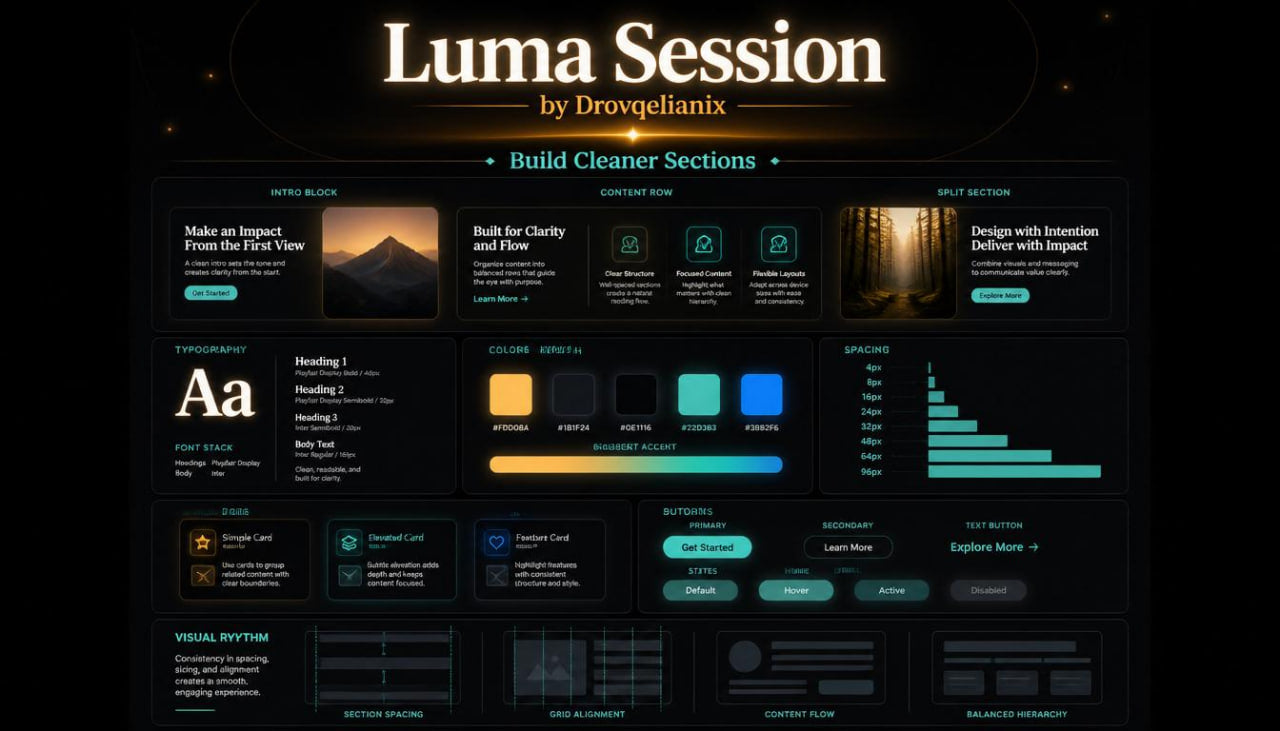
This plan gives learners a structured set of modules focused on visual order, section design, and reusable styling habits. It shows how HTML blocks can be grouped into clear areas such as intros, feature rows, cards, and call-to-action sections. CSS topics are introduced through practical examples, so each rule connects to something visible on the page. Learners work with typography, spacing, colors, borders, and layout patterns in a calm sequence. The goal is to help learners build cleaner static page sections with more care and intention.
3. What’s Inside
Luma Session includes a guided HTML/CSS module built around section-based page practice. Learners study how to create a page intro, content rows, simple cards, link groups, and small visual blocks using semantic HTML. The CSS materials cover font pairing, text size relationships, line height, color contrast, spacing systems, border radius, background sections, and hover states for simple interactive details.
The plan also includes practice files for building a compact landing section, a three-card course overview area, and a short contact-style block. Each practice task includes notes explaining why the structure is arranged that way and how the styling choices affect the final page. Learners also receive a naming guide for classes, helping them keep CSS readable as sections grow.
There is a layout review checklist covering spacing consistency, repeated style values, heading order, button styling, image sizing, and section alignment. The materials also include a small refinement task where learners adjust an existing page section instead of starting from nothing. This helps them study editing, cleanup, and visual improvement as part of normal coding practice.
4. Who Is This For?
Luma Session is intended for learners who already know the basic idea of HTML tags and CSS selectors, but want more practice shaping complete page sections. It fits people who enjoy visual structure and want to understand how small styling decisions change the feel of a page. It is also suitable for learners who completed Free Blueprint and want a broader set of guided materials.
5. What You’ll Learn
- How to build structured page sections with semantic HTML.
- How to style intro blocks, cards, buttons, and content rows.
- How spacing and typography create visual rhythm.
- How to use reusable class names in a clean way.
- How to apply colors, borders, and background sections with purpose.
- How to review and refine a small static page section.
- How to connect HTML structure with CSS styling decisions.
6. 30-Day Refund Note
For this paid plan, Drovqelianix may provide a 30-day refund option using clear store terms. The refund policy should be written plainly, with no exaggerated claims or outcome-based wording.
Self-paced learning overview
- 🗂️ Digital file available after purchase
- 📚 Long-term availability
- 🔐 Secure checkout
- 🛠️ Content updated in 2026
How are the courses arranged?
How are the courses arranged?
Each course is built around modules, written materials, practical tasks, and examples for HTML/CSS study.
Do I need prior coding knowledge?
Do I need prior coding knowledge?
No prior coding background is required for the first plan. Higher plans move into broader layout and styling topics.
What happens after choosing a plan?
What happens after choosing a plan?
You receive the materials connected to that plan and can study them at your own pace.
Share