Drovqelianix
Anchor Pattern
Anchor Pattern
Couldn't load pickup availability
1. Problem Statement
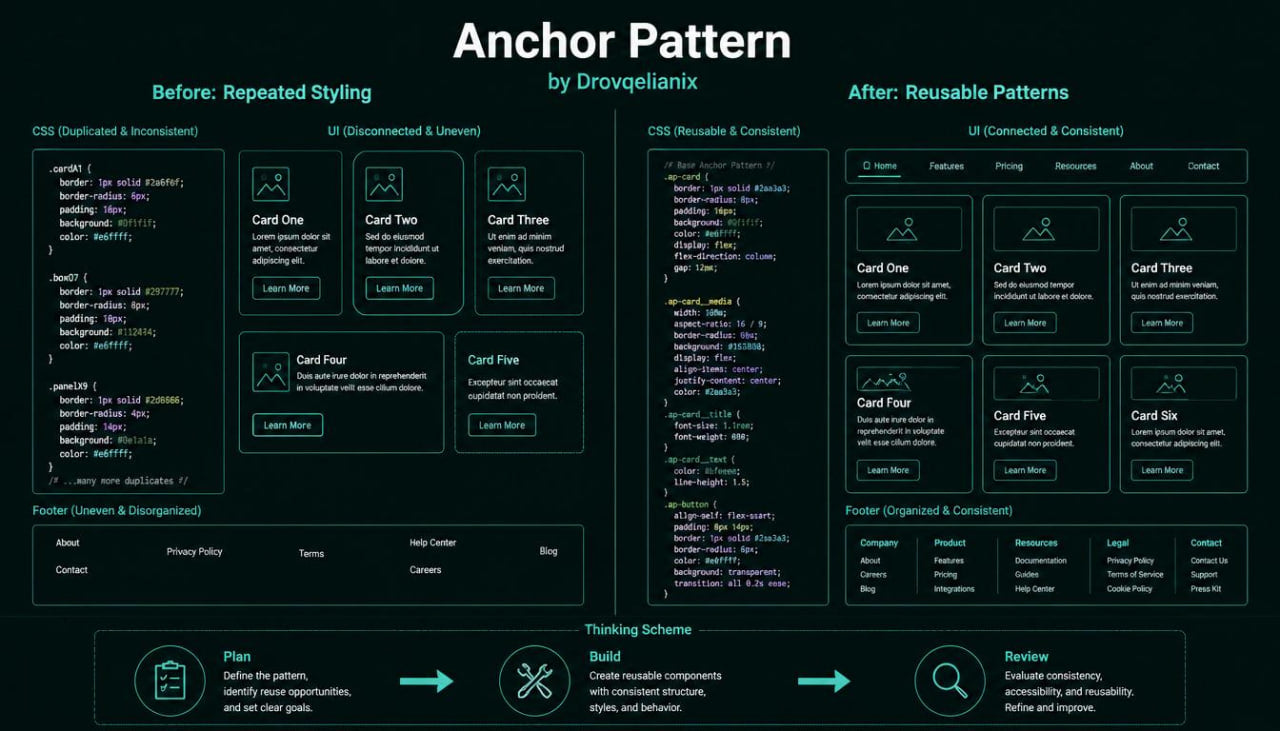
Many learners can create separate page elements, but struggle to connect them into a page that feels consistent. One block may look neat, while the next uses different spacing, naming, or visual rules. CSS can become messy when every new section is styled from scratch. This makes it harder to revise a page or reuse earlier work. Anchor Pattern is made for learners who want a steadier way to organize HTML/CSS materials.
2. Solution
This course introduces reusable structure through practical pattern-based modules. Learners study how repeated blocks can share class naming, spacing rules, and visual logic. The course shows how to plan a page before writing every style rule, so the layout has a stronger foundation. Each module connects a coding concept with a small page component, such as navigation, cards, content rows, and footer areas. By the end of the course, learners have a cleaner method for building and revising static page sections.
3. What’s Inside
Anchor Pattern includes modules on component thinking for HTML/CSS. The materials begin with page planning: learners look at how a static page can be divided into repeated parts, including header areas, intro sections, text blocks, image areas, cards, forms, and footer layouts. From there, the course moves into class naming, wrapper elements, spacing values, reusable button styles, and section backgrounds.
The CSS materials cover layout patterns with display rules, spacing scales, alignment, width control, and responsive behavior using neutral examples. Learners create several small components, then combine them into a single page draft. The course also includes a pattern journal worksheet where learners write down class names, reusable style decisions, and notes about why each block is arranged in a certain way.
There are guided tasks for building a course card layout, a two-column information section, a simple navigation row, and a footer with organized links. Each task includes review prompts for checking HTML nesting, heading order, spacing consistency, and CSS repetition. Learners also revise one earlier block by turning repeated values into reusable class patterns.
The course includes written materials on common beginner issues, such as oversized spacing, unclear class names, inconsistent button styles, and uneven content alignment. These notes help learners understand not only what to write, but how to keep their code easier to read during future practice.
4. Who Is This For?
Anchor Pattern is intended for learners who already understand HTML tags and simple CSS rules. It fits people who want to move from isolated exercises into organized page sections. It is also a good fit for learners who enjoy visual order, reusable structure, and practical coding routines.
5. What You’ll Learn
- How to divide a static page into reusable sections.
- How to create consistent class names for HTML/CSS work.
- How to style cards, buttons, navigation rows, and footers.
- How to use spacing values with stronger visual order.
- How to reduce repeated CSS through shared patterns.
- How to review HTML nesting and heading structure.
- How to combine small components into a larger page draft.
6. 30-Day Refund Note
Anchor Pattern includes a 30-day refund option under the store’s stated terms. The wording should stay plain and focus only on purchase conditions, without outcome claims or pressure-based language.
Self-paced learning overview
- 🗂️ Digital file available after purchase
- 📚 Long-term availability
- 🔐 Secure checkout
- 🛠️ Content updated in 2026
How are the courses arranged?
How are the courses arranged?
Each course is built around modules, written materials, practical tasks, and examples for HTML/CSS study.
Do I need prior coding knowledge?
Do I need prior coding knowledge?
No prior coding background is required for the first plan. Higher plans move into broader layout and styling topics.
What happens after choosing a plan?
What happens after choosing a plan?
You receive the materials connected to that plan and can study them at your own pace.
Share